arXiv preprint 2025
SpecDetect4AI
Automated Detection of AI Code Smells Using a Domain-Specific Language
A domain-specific language to specify AI-specific code smells, combined with static code analysis to detect them automatically in AI codebases.


PhD Student in Software Engineering
Passionate about artificial intelligence and software quality, I work on making AI-based systems more reliable, maintainable and robust.

About
My name is Brahim Mahmoudi, and I am currently a PhD student in Software Engineering at the École de technologie supérieure (ÉTS) in Montréal.
Passionate about artificial intelligence and software quality, my research focuses on improving the reliability, maintainability, and robustness of AI-based systems. Specifically, I work on the detection of AI-specific code smells through static code analysis and the design of a domain-specific language (DSL) that helps identify and prevent common pitfalls in AI codebases.
I hold an engineering degree in computer science from INSA Lyon, and I continued my academic path with a research-based master’s in software engineering at ÉTS, where I specialized in software quality, program analysis, and the modernisation of intelligent systems.
Outside of research, I am also a student-athlete, proudly representing the ÉTS rugby team, the Piranhas, with whom I became both provincial and national champion in 2024. This dual commitment has shaped my values around discipline, perseverance, and teamwork, which I bring both to the lab and to the field.
PhD Project
Specifying and detecting the pitfalls that make AI-based and LLM-based software fragile.
arXiv preprint 2025
Automated Detection of AI Code Smells Using a Domain-Specific Language
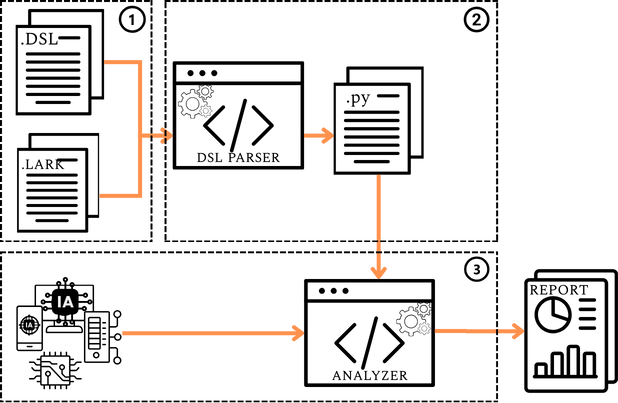
A domain-specific language to specify AI-specific code smells, combined with static code analysis to detect them automatically in AI codebases.
ICSE 2026, NIER track
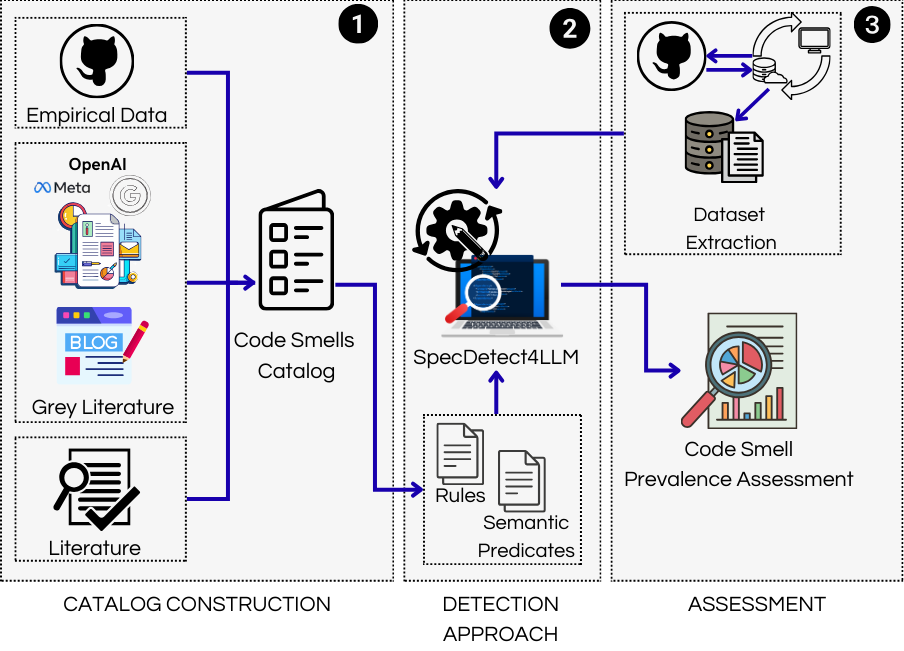
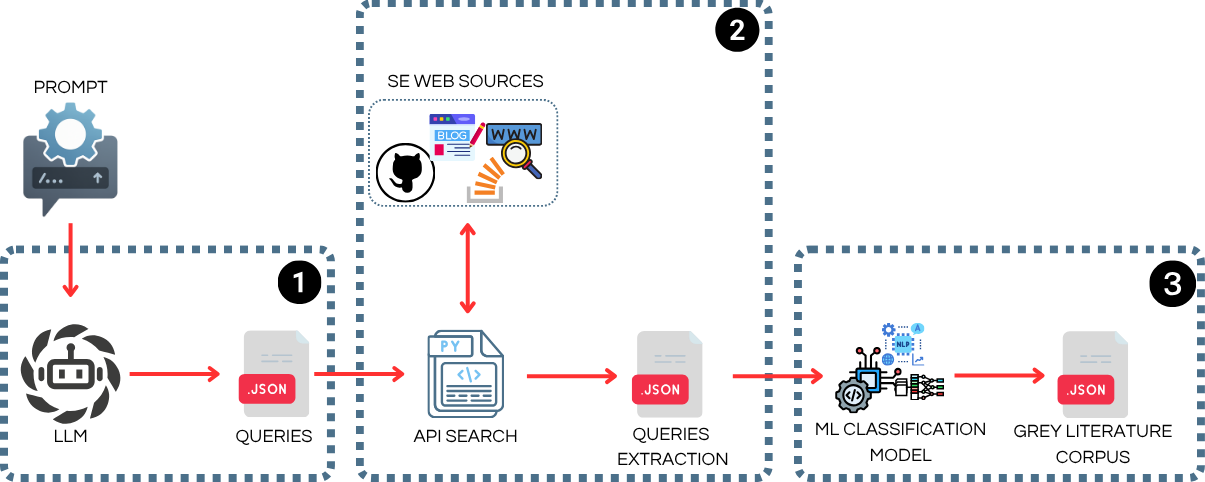
A catalog of code smells specific to software that integrates large language models, built from the literature, grey literature and empirical data, then detected automatically and assessed for prevalence.
Master Project
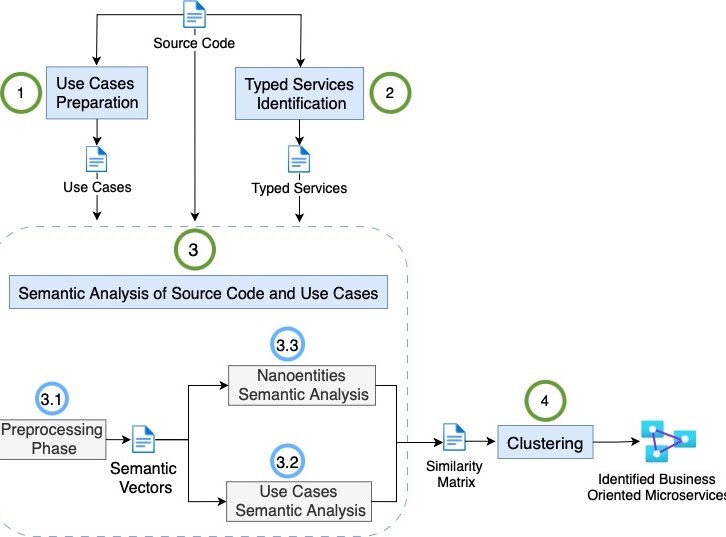
A Business Oriented identification Approach of Microservices within legacy systems.
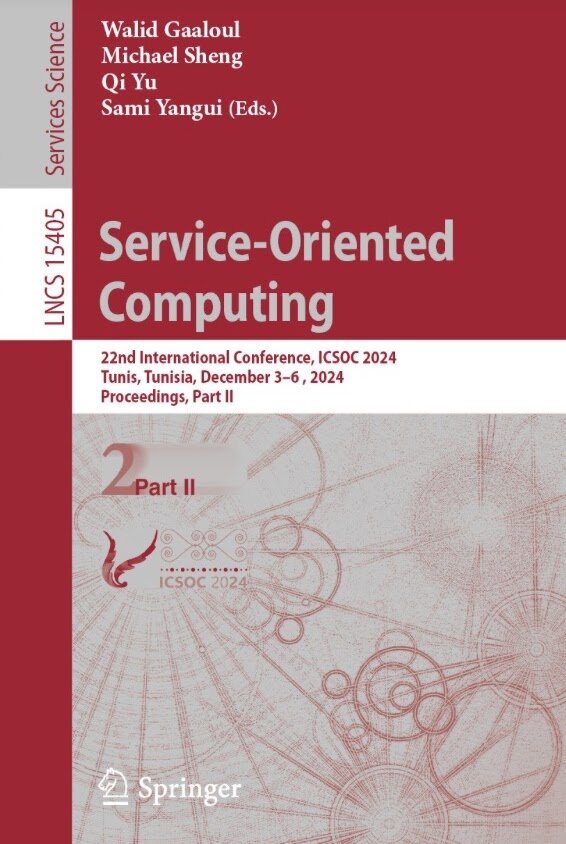
ICSOC 2024, LNCS vol. 15405
“BOAM: A Business Oriented Identification Approach of Microservices Within Legacy Systems”, presented at ICSOC 2024 (International Conference on Service-Oriented Computing) and published in Lecture Notes in Computer Science (LNCS, vol. 15405).
In this paper, we introduce BOAM, a hybrid approach that combines source code analysis with business use cases to automatically identify microservices within legacy systems. Our method leverages static and semantic analysis as well as machine learning techniques to deliver relevant and actionable microservice groupings.
Thanks to my co-authors and the research team for this great collaboration!
Papers
2026
2026
MSRIn Proceedings of the 23rd International Conference on Mining Software Repositories (MSR 2026)
2025
IEEE TSEIEEE Transactions on Software Engineering, 51(11), 2972–2995
2025
2024
ICSOCIn ICSOC 2024 Workshops, Lecture Notes in Computer Science (Vol. 15405), Springer, pp. 123–137
Writing
Articles published on the Ptidej Team Blog.
Contact
Happy to talk about research collaborations, software quality for AI-based systems, or rugby.